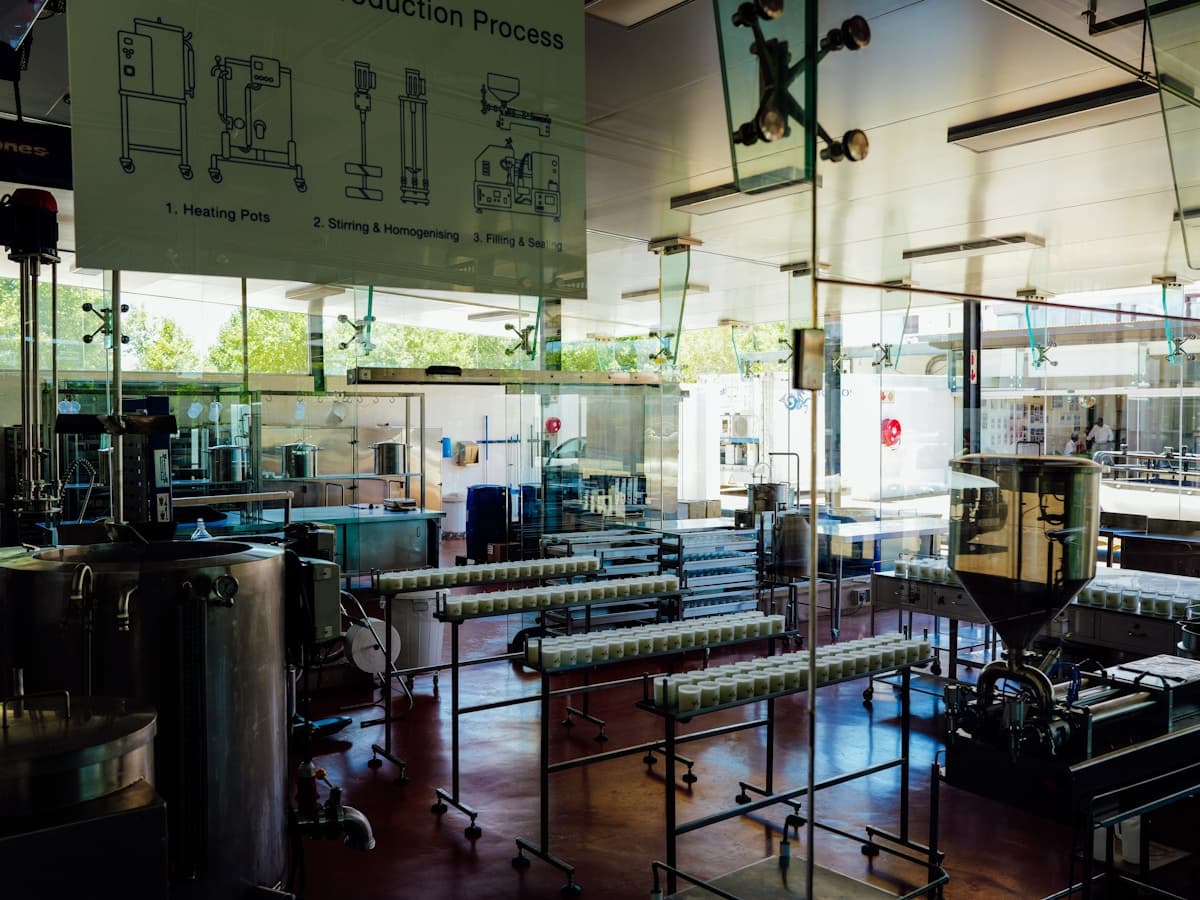
A food or drink producer carries cash in two places at once: in the chilled store as finished and part-finished stock, and on the sales ledger as invoices to grocers who pay on long terms. Asset-based lending pulls both into a single revolving facility, plus the production plant if it is worth securing, so the business borrows against the whole working-capital cycle rather than one slice of it. For a producer whose receivables alone do not stretch far enough, that combination is the difference between funding a production run and turning the order down.
The structure matters more than the label. A standalone invoice finance line releases cash against the debtor book and stops there. Asset-based lending adds an inventory line and, where relevant, a plant-and-machinery tranche, governed by a single borrowing base that is recalculated as stock turns and invoices are raised and paid. That is why ABL fits scaling producers and acquisitive ones better than a pure receivables facility: the headroom grows with the balance sheet, not just with last month's sales.
Why stock is the awkward asset in food and drink
Lenders price inventory on what it would fetch in an orderly wind-down, not on its book value. The working measure is net orderly liquidation value, the proceeds an appraiser thinks the stock would raise if sold off in a controlled manner after the costs of doing so. Across general ABL, eligible inventory tends to draw advance rates in the region of 40 to 60% of that liquidation value, well below the rate on trade debtors, and food and drink usually sits at the cautious end of that band.
Three features of the sector push it there:
- Shelf life. A pallet of long-life ambient product holds its value through a wind-down. Chilled and short-coded stock does not. The closer a line sits to its use-by date, the less an appraiser will stand behind, and genuinely perishable lines are often excluded from the borrowing base altogether rather than advanced against at a haircut.
- Work in progress earns nothing. Raw materials and finished goods get tested for liquidation value; partly-made product, a brew mid-fermentation, a cheese still maturing, is typically disregarded. A producer with a long maturation cycle has more of its stock sitting in the column the lender will not fund.
- Branding and bespoke packaging. Finished goods in a retailer's own-label livery, or in promotional packaging cut for one customer, are hard to redeploy elsewhere. The more own-label or customer-specific the run, the thinner the recovery an appraiser assumes.
So the inventory line in a food and drink ABL is rarely the headline number. It is a real addition to availability, but it is the debtor book that usually does the heavy lifting, with stock adding a meaningful top-up against ambient finished goods and marketable raw materials.
What the grocers do to the debtor side
The receivables half of the facility is where the major retailers reshape the maths. Suppliers to the big grocers raise large invoices and then wait, and the wait is the point of the facility. The Groceries Supply Code of Practice requires designated retailers, those turning over more than £1bn in UK groceries, to pay within a reasonable time after the invoice date, and the Groceries Code Adjudicator exists to police that. Reasonable in practice still runs to weeks, and the gap between paying suppliers for ingredients and packaging and being paid by the grocer is precisely what an invoice finance line inside the ABL bridges.
Concentration is the second grocer effect. Many invoice finance providers apply a concentration limit of around 30% per debtor, meaning anything a single customer owes above that share of the ledger is funded at a lower rate or not at all. For a producer with most of its turnover running through one or two grocers, a blanket limit would strand a large part of the receivables. Specialist food lenders handle this differently: a designated grocer is a strong payer, so the better files carry a higher approved limit, or a named carve-out, on the back of the contract and the payment history rather than being squeezed under a generic cap. Getting that limit lifted is one of the more valuable things a broker does on a food file.
When ABL beats the alternatives
For a single piece of kit, ABL is the wrong tool. A new filling line or a blast freezer is cleaner to fund through asset finance on hire purchase or lease, ring-fenced against that asset, leaving the working-capital facility untouched. ABL earns its place when the need is working-capital depth across a moving balance sheet: a producer scaling into a bigger listing, funding a seasonal build, or carrying acquisition stock, where debtors, inventory and plant together create more availability than any one of them alone.
The trade-off is intrusiveness. An ABL facility comes with field audits and periodic inventory appraisals, and availability flexes as those numbers move. A producer that runs tight stock records, dates its inventory cleanly and can show ambient finished goods as a distinct pool from short-coded chilled lines will be advanced more, and audited more cheaply, than one whose system cannot separate the two. The discipline that earns a better borrowing base is the same discipline that runs a tighter factory.
If your working capital is genuinely tied up in both stock and a grocer-heavy ledger, ABL is usually the right shape, and the other food and drink funding routes are better read as components of it than as competitors to it. The number worth pressing a lender on is not the headline facility size but the inventory advance rate and the concentration treatment of your largest grocer, because those two figures decide how much of the facility you can actually draw.